Are you confident in your self-defense skills?
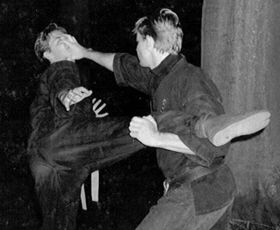 “Regardless of who you are, where you live or where you work the possibility of encountering a situation requiring self-defense skills are the same for everyone!”
REALITY: You can not learn practical self-defense skills in a few days or weekend seminar. They must be internalized to the point of being instinctive. If not, your skills are useless.
Everyone needs a strategy for defending themselves physically and mentally. Self-defense is not about being stronger or more aggressive. It is about maximizing your potential to improve your chances in any situation.
It is a fact that strength, size and speed are major factors in a physical encounter. And yes, a person who is lacking in these areas can learn to develop certain techniques to improve their outcome.
“Confidence is built from having the courage to put yourself in unique situations that require you to adapt.”
STORY: I remember being in an elevator with a champion kickboxer and friend. The elevator came to a crashing stop and we could hear things fall from above. This happened very fast and my hands immediately shot up to protect my head and be in a reactive stance. My friend reacted too but more naturally trying to brace himself. Luckily, we didn’t have the roof caving in over our heads and we go out of the elevator. Bringing my hands up to protect the CPU or brain was a reaction. I didn’t have to think about it.
There is a kind of cool attitude attached to not flinching, I used to practice this with my brothers when I was a kid. But there is nothing cool about having a piece of metal sticking into the top of your head.
Reactions are important and that is why a typical self-defense program will not work. You need specific training and drills that help you to instill a reactive mind and prepare you for unexpected events. You need a routine and an environment to practice.
Here are just a few of the things you will learn:
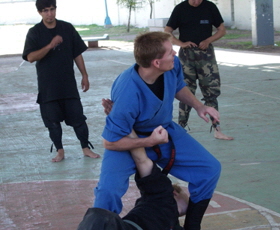 Mental awareness
- Indoor / Outdoor Survival
- Combat grappling
- Strikes and kicks that work
- Scene based training
- Knife and Stick
- Weapons in the environment
- Mental preparation
- True internal confidence
- Accepting the reality
- Body movements
Life is about feeling confident regardless of where you are.
You can learn this in 1 month or 4 weeks
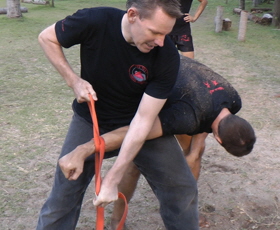 The PSC Personal Security Course provides you with the ability to do the best you can when protecting yourself or others.
It is nothing like what you might confuse with what is seen on TV or in the movies. These situations are an illusion.
REALITY: It is unrealistic to believe you will be 100% effective in a situation requiring you to defend yourself or others.
Yes, you must expect the best and plan for the worst. The goal of the PSC program for self-defense is to improve your base chance of survival through a series of unique training strategies.
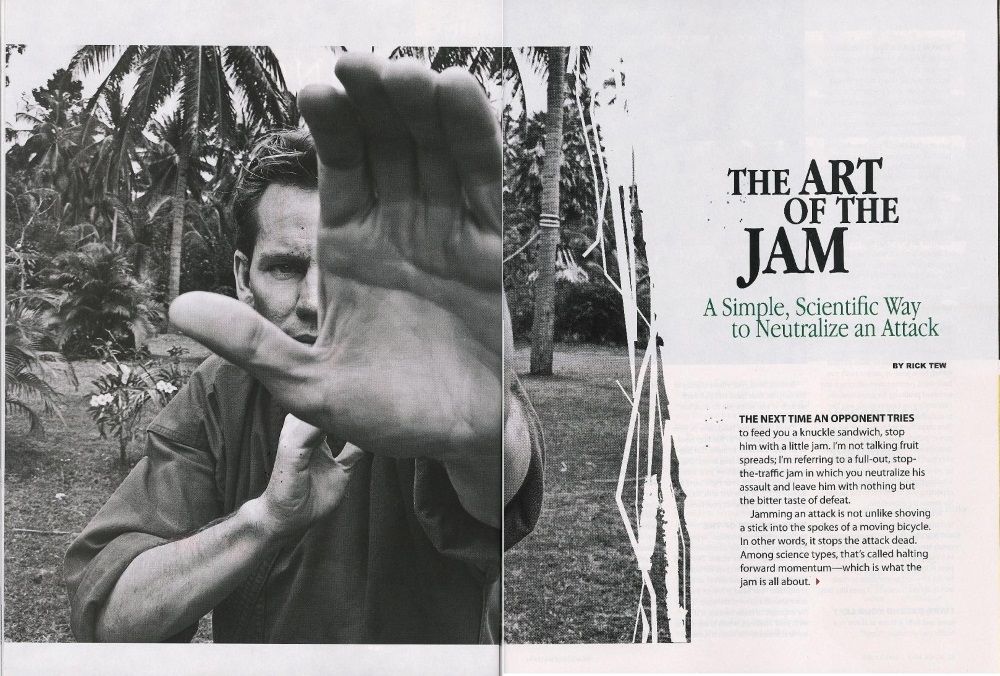
Rick Tew is your qualified Master Instructor
Can I learn self-defense even as a beginner?
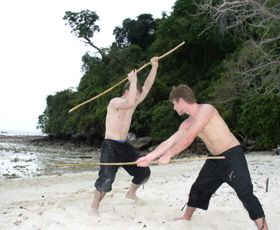 PSC offers a simple but effective solution for the everyday person. It is about your Personal Security and how to improve it.
No we do not use a fancy name and we are not a branch of the military. We take a different approach.
Oddly enough, people that understand the psychology of a defender are people just like you. A person with a heavy background in the military or the police does not see the world the way that a typical civilian does. We use tactics and techniques that help match your personality to improve your performance.
There are only so many things you can or cannot do when learning about self-defense. What you can do is choose an environment that feels right for you.
Combining his experience teaching martial arts and psychology of human behavior, Rick Tew offers a complete 1-3 month program on improving your life by enhancing your confidence and self-defense foundation.
Here are some of the benefits you will receive with PSC
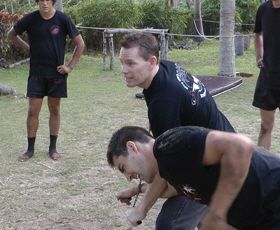 Our strategies are designed to take your base skill level (chance of survival) and immediately double that level within the period of 1 month. This may seem like a lot but it really is only the first step.
Here are a few of things you will learn in the first 3 days of our program:
Day 1
- Why is self-defense important and the theories behind the personal security course.
- What is a natural response and how can we go about making this a part of our being?
- How can we protect the most important part of our lives.
Day 2
- Determining your foundation skill level in PSC and understanding the principles that make take it to the next level.
- Physical strategies for self defense and targeting the body with primary striking areas and why.
- Weapons of the body and how to use them. What it most practical and why.
Day 3
- To act or not to act. When you strike or when to use your head and how.
- How to use simplicity, strength, surprise and strategy to your advantage for self-defense and applications.
- Breaking the grips of detainment, both Physical and mental.
- Three strategies that can make the difference between life or death. Concepts that can make the difference between being in the right place at the wrong time or the wrong place at the right time.
- Dealing with fear and how to overcome issues that would normally be debilitating.
Can I really double my skills in only 1 month?
 Actually this happens usually in the first week. But you need to understand how and why this happens. Let’s say that your current base provides you with a likelihood of security at about 10%. The skills you learn in the first week may increase this base percentage to 20%. So 20% is not very high, but it is a 100% increase and you just doubled your foundation.
The goals is to work on this concept to great more solid ground. A foundation is only possible with a routing training program. That is why we offer a live-in full focused program for 1 month.
Looking at self-defense from the perspective of a physical attack, you must realize that being assaulted and harmed does not mean your skills were not practical. Maybe you would have been harmed more if you had not spent at least some time training. The goals is always to improve that base percentage.
We teach you how to improve your ability to defend yourself with our unique Personal Security Course and self-defense training program. We do this by improving on your existing strengths while also improving the area where you are weak.
A month seems like a long time to spend away from home.
 Yes, it can be tough for people to get a month away for a program like this. So here are a few questions and a few options:
Would you take a month out of your life if it meant it could save you an entire life?
Can you take a week out of your schedule and return at a later date for another week until you have at least 4 weeks invested into your PSC?
The reason we can get these strategies in place for you is because they require a certain routine. We have trained students for a number of years and one thing that seems to be existing in everyone is that they forget. Learning a skill or tactic takes the right amount of training in a unique way to get it to the be a part of you. Also, Rick Tew teaches in a friendly conversational manner and has the patience to really help you to grow. You are learning from a person that has been on this path his whole life. Most others have jumped on the bandwagon for financial gains. You are not limited to the enrolled training programs when working with us.
REALITY: Yes, you need to invest a minimum of 1 month into learning strategies to help you perform at your peak when the time is needed.
I don’t like military boot camp style programs
 Our program is unique in that we build around the Student. Unlike many programs that want to drag you through the mud, we believe that is only effective if that is something you desire to do.
Meaning, we focus on what you need and we create a fun environment for people to share, grow and gain a great experience.
This is a program with other people just like you, taught by normal people that understand that grunting, aggressive minds and boots don’t make for a fun group.
We tailor to educated people that need an edge up and that also enjoy great conversation and being with others of like mind.
So many people are online pretending to be experts these days.
Join now and save both your money and your life
Time to go for it and we can be kicking it soon – sign up now.
Warning – you can’t act when it is too late
This program and it’s availability is limited
Is it fun or all serious?
What is the price you will pay if you don’t have confidence in your self-defense skills?